Adapting an Indicator
WHO HIV DAK → Ethiopia · authored in Annex C (indicators & performance metrics)
INDICATOR

The 6 steps
- Locate & check computable. In Annex A, filter by Linkages to aggregate indicators. Numerator and denominator must come from routine data elements — if it needs a survey or external source, STOP (not a DAK indicator).
- Read the WHO logic. The numerator and denominator definitions, and which data elements they use.
- Find national divergences. Disaggregations and the exact national definitions of the counts. [confirm: ETH]
- Author. Fill the Annex C template fields (format →).
- Check. Numerator & denominator come only from Annex A elements; reconcile against a known total (e.g. last quarter).
- Record provenance. Divergence from the WHO definition + national reference; track the version.
Worked shape — HIV testing positivity
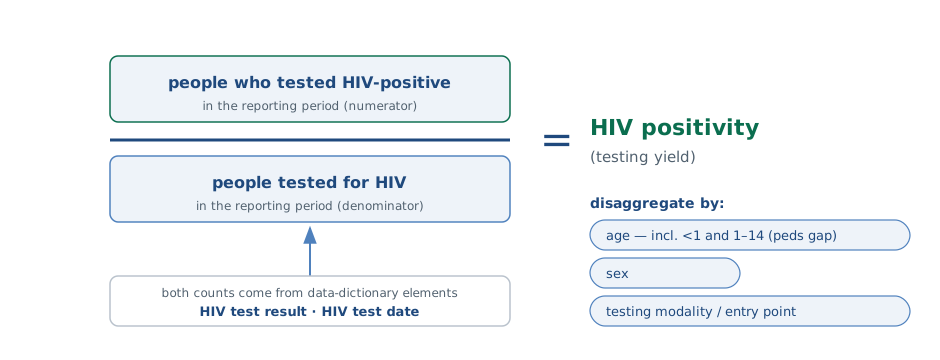
Format (Annex C)
- short name · definition · category · what it measures · rationale
- numerator definition + calculation
- denominator definition + calculation
- disaggregation · reference (+ DAK ID, SI ref)
- Pattern:
COUNT of clients where [element]=value AND [date] in period
Don't break it
- Not computable from routine DAK data (survey / supply / multi-source) — measured elsewhere, not authored as DAK logic: condoms distributed, needles/syringes, condom use, KP know-status, KP on ART
- Every element must already exist in Annex A
- Changed a DD element? Update every linked indicator (Annex A Linkage columns)
- Mind operator precedence; keep population names consistent
Done?
- Computable from routine data
- Num & denom are Annex A elements
- Disaggregation matches national reporting
- Reconciled to a known total
- Provenance recorded; ground-truthed